On a large Ascot roof the covering itself is rarely what fails. It is the junctions — valleys, flashings, lead soakers and chimney abutments — and they leak long before anything shows on a ceiling.
We start every repair with a proper inspection rather than an assumption. Water travels along battens and rafters before it drops, so the damp patch inside is often several metres from the entry point. Chasing the stain instead of the cause is how homeowners end up paying twice for the same job.
Typical repairs on Ascot properties include renewing lead flashings where old cement fillets have cracked, re-forming lead valley gutters that have split at the fold, replacing individual slates with hooks or tingles rather than mortar, and repairing the flaunching on the tall chimney stacks that come with period houses here.
- Split slates and cracked clay tiles replaced and matched
- Lead flashings, soakers and valley gutters re-formed
- Chimney flaunching and stack pointing repaired
- Leaks traced to the entry point, not the stain
- Photographic evidence of the fault before and after
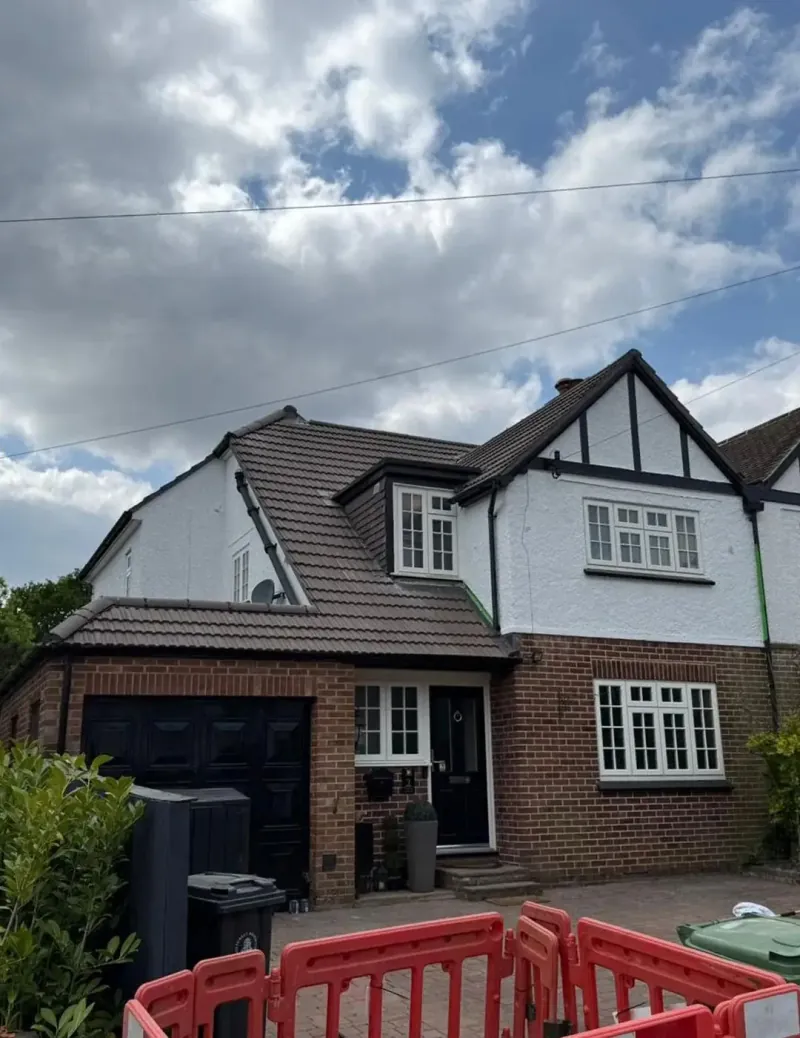
Full Roof Repairs Guide A full replacement on an Ascot roof is a serious piece of work — often several thousand slates or tiles across multiple pitches, with dormers, valleys and leadwork to detail as you go.
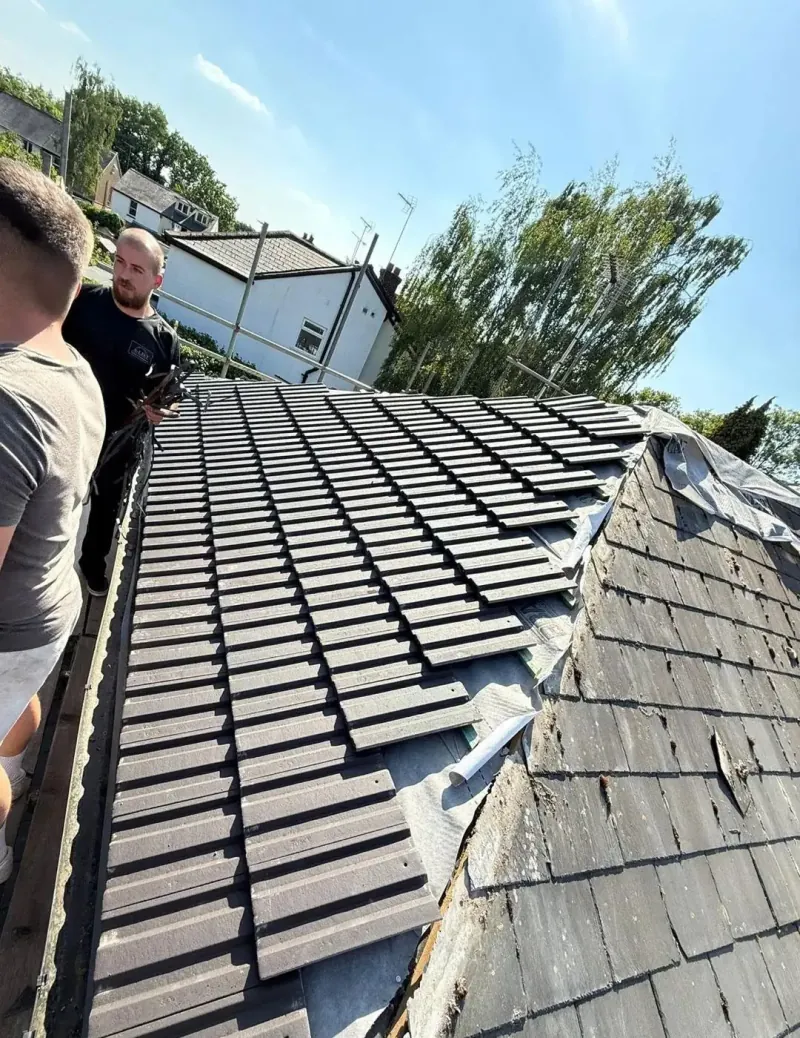
Many of the larger houses here still carry their original underlay. Once that secondary barrier has gone brittle and torn, wind-driven rain gets past the covering and starts wetting the timbers, and no amount of surface repair will stop it. On a steep roof with deep valleys, that damage can be well advanced before anyone notices.
We strip the covering, inspect and repair battens and rafters, fit modern breathable membrane, re-batten and lay your chosen covering with new ridge, verge and flashing details throughout. Scaffolding, waste removal and the tidy-up are quoted as part of the job, not added afterwards.
- Full strip, inspect and re-cover across all pitches
- Modern breathable underlay for a healthier roof space
- Natural slate, clay tile or concrete tile to suit the property
- All valleys, dormers and abutments re-detailed in lead
- Scaffolding, waste removal and site clean-up included
Full New Roofs Guide Orangeries, garden rooms, dormer cheeks, balconies and garage roofs all rely on flat roofing, and they are what we are called out to most often when water starts coming in.
The usual culprits are old pour-and-roll felt that has blistered and split, or a roof that was never laid to a proper fall, so water sits in a pond in the middle rather than running to the outlet. Standing water finds every weakness eventually — and on a garden room with a lantern, that means a leak directly over a room you actually use.
We re-deck where boards have softened, build in the correct falls, and re-cover in a system chosen for the roof in question: single ply membrane, GRP fibreglass, EPDM rubber or high-performance torch-on felt. Upstands, drips, lantern kerbs and outlets are detailed properly, because that is where flat roofs almost always fail.
- Single ply, GRP fibreglass, EPDM rubber and torch-on felt
- Correct falls designed in so water reaches the outlet
- Rotten decking replaced before the new covering goes down
- Lantern kerbs and rooflight upstands detailed properly
- Warm roof build-ups where insulation needs upgrading
Full Flat Roofs Guide Natural slate and clay tile define the look of Ascot’s older streets, and both are unforgiving of shortcuts. A badly executed repair is visible from the pavement for the next thirty years.
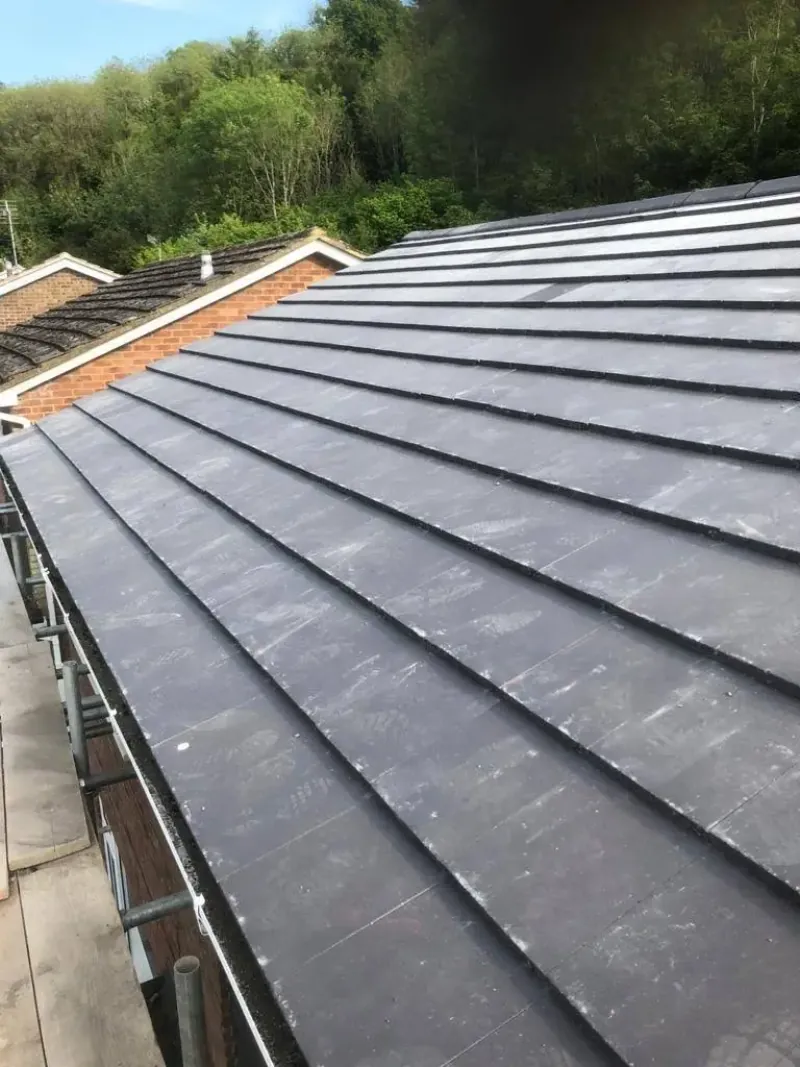
Slate fails predictably: the nails corrode long before the slate does, so individual slates slip while the roof around them is still sound. A roof that has been "repaired" with mortar and mastic instead of proper hooks or tingles will keep failing, and each patch makes the next one harder. We work slate the traditional way, matching size, thickness, colour and gauge.
On tiled roofs we handle everything from handmade clay peg tiles to modern interlockers, including the verge and ridge details that take the brunt of the weather. Where old mortar bedding keeps cracking on an exposed ridge, we will usually recommend converting to a mechanically fixed dry system.
- Natural slate laid and repaired traditionally
- Clay and concrete tiling, plain and interlocking
- Sympathetic material matching on period properties
- Dry ridge and dry verge conversions
- Underlay, battens and timbers checked as part of the work
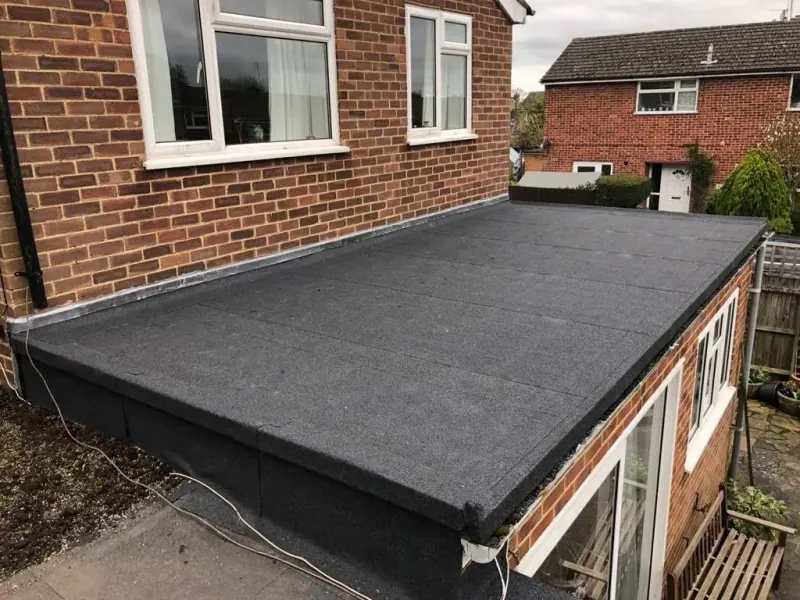
Torch-on felt is still the sensible choice for garages, stables, workshops and outbuildings, where a premium system would be money spent for no benefit.
The difference between felt that lasts twenty years and felt that fails in five is almost entirely preparation and detailing. We replace soft or delaminated decking, prime the surface, and bond a three-layer high-performance system with properly welded laps.
Edges, upstands and outlets get metal trims and dressed detailing rather than a smear of mastic, and we finish with a mineral cap sheet that copes with both winter frost and the heat that builds on a south-facing garage roof through summer.
- High-performance three-layer torch-on systems
- Decking replaced where it has softened
- Welded laps, metal drip trims and dressed upstands
- Mineral cap sheet finish
- Garages, stables, workshops and outbuildings
Ascot’s larger houses come with long gutter runs and deep overhangs, which means more joints, more brackets and more places for a roofline to start letting go.
Once fascia timber softens, the gutter brackets lose their grip and the run begins to sag. Water then spills behind the gutter and down the brickwork instead of into the downpipe, which is how damp patches appear on internal walls with no obvious leak in the roof itself. On a long run the sag is gradual and easy to miss from the ground.
We replace fascias, soffits, bargeboards and guttering in maintenance-free uPVC — including cast-iron-effect profiles where a period property needs the heavier look — and build in continuous or over-fascia ventilation so the roof space breathes. Gutters are re-run to correct falls and downpipes discharged properly.
- Full uPVC roofline replacement in white, black or woodgrain
- Cast-iron-effect profiles for period properties
- Rotten fascia and soffit timber removed, not covered over
- Continuous soffit or over-fascia loft ventilation
- Long gutter runs re-hung to correct falls
Ascot is heavily wooded, and that is the single biggest maintenance issue its roofs face. Pine needles and oak leaves fill valleys and hoppers faster than most owners expect.
Needles pack far more densely than leaves and are almost impossible to flush out once compacted. On a roof with deep lead valleys — which describes most of the period houses here — a blocked valley does not simply overflow outward. It backs water up under the slates, where it soaks into battens and rafters and does damage that is invisible until the ceiling goes.
We clear gutters, downpipes, hoppers, valleys and flat roof outlets, flush the runs through to check they actually drain, and remove moss from the roof surface where it is holding water against the covering. We will also flag anything else we notice while we are up there — a slipped slate is far cheaper to fix before it becomes a leak.
- Gutters, valleys, hoppers and downpipes cleared
- Runs flushed through and checked for correct fall
- Moss removal from slates and tiles
- Debris taken away, not left in the borders
- Free report on anything else we notice up there
When a roof fails suddenly the priority is stopping water getting in. Everything else — the insurance claim, the permanent repair — can be sorted out afterwards.
Ascot’s mature tree cover is a mixed blessing in a gale. Alongside the usual lifted ridge tiles and peeled-back garage felt, we are regularly called to branches through conservatory roofs and limbs down across a main slope, which does far more damage than wind alone.
Call us at any hour and we will get out to make the roof safe, remove anything at risk of falling, sheet up the damage and stop the ingress. Once the property is protected we inspect properly in daylight, prepare a written quote for the permanent repair, and provide the photographs and detail your insurer will ask for.
- Available 24 hours a day, seven days a week
- Rapid temporary weatherproofing and sheeting
- Storm and fallen-branch damage made safe
- Full photographic record for insurance claims
- Permanent repair quoted in writing afterwards